$git tag v0.2.2
$git push origin v0.2.2
okrelease workflow started on GitHub Actions
okmacOS Apple Silicon DMG uploaded
okWindows MSI and setup EXE uploaded
okLinux AppImage, DEB, and RPM uploaded
runnpm run site:build
$ pngun --workspace release-lab --ai-bridge
Pngun combines real PTYs, split panes, persistent workspaces, Claude Code, HER, and failure-aware terminal context in one desktop app.
$git tag v0.2.2
$git push origin v0.2.2
okrelease workflow started on GitHub Actions
okmacOS Apple Silicon DMG uploaded
okWindows MSI and setup EXE uploaded
okLinux AppImage, DEB, and RPM uploaded
runnpm run site:build
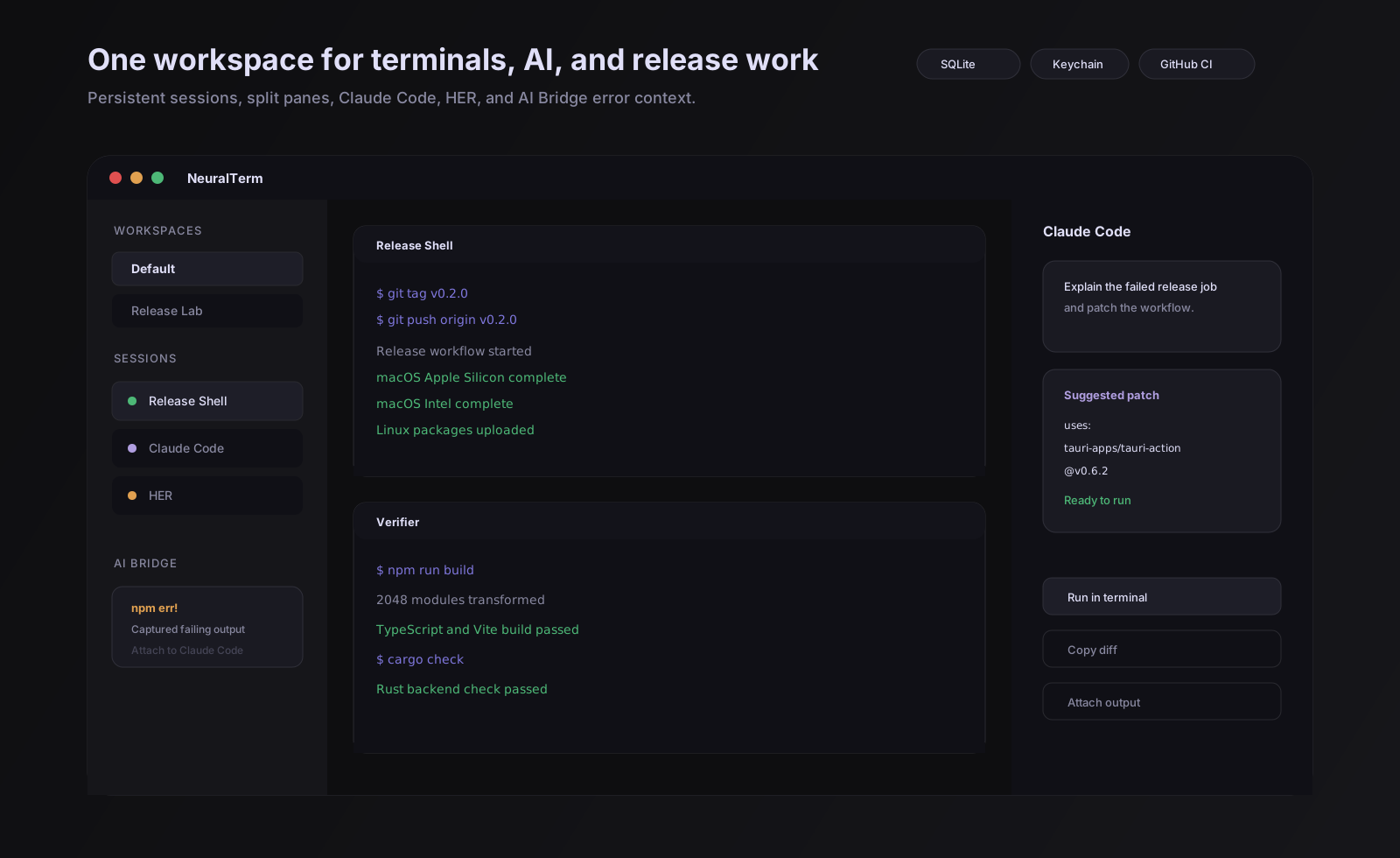
Captured failing command, cwd, and stderr excerpt.
Sent compact terminal context into Claude Code.
Suggested patch can run back inside the terminal.
$ open workflow
Keep the command, logs, assistant, and release state in one scan. The website now mirrors that working surface instead of presenting the product as a static brochure.
/new shellCreate a persistent PTY session/split verticalKeep logs beside the active prompt/attach errorSend bridge context to Claude Code/release v0.2.2Open the GitHub release assetsdetect npm error pattern in release-shell
capture stderr excerpt, command, cwd, session id
attach create Claude Code context bundle
run apply suggested fix inside terminal
$ ls features
Real shell sessions through portable-pty with resize, write, kill, and event streaming.
SQLite keeps workspaces, sessions, splits, collapsed state, and AI message history durable.
Claude Code and HER panes support markdown, attachments, voice input, and run-in-terminal actions.
Terminal failures become compact AI suggestions instead of manually copied log chunks.
Anthropic credentials live in the OS keychain in the packaged desktop app.
GitHub Actions builds macOS, Windows, and Linux artifacts for versioned releases.
$ preview workspace.svg
Sidebar sessions, split terminal panes, AI Bridge, and assistant context are treated as the visual system, not as decorative screenshots.
$ cat stack.json
$ ./download
Signing and notarization are still pending, so operating systems may show trust warnings on first launch.